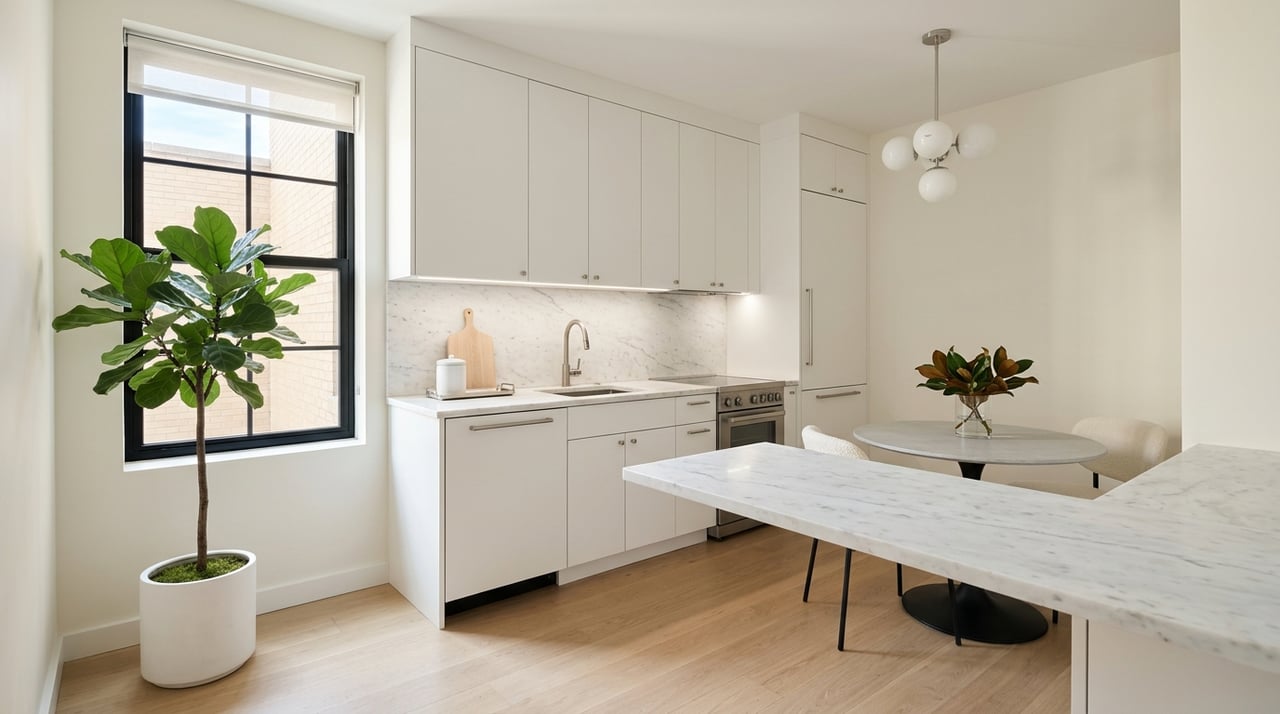
Selling A Midtown West Pied-à-Terre: A Step-By-Step Overview
April 2, 2026
April 2, 2026
Selling a pied-à-terre in Midtown West can feel simple on the surface, but the details matter fast. If you only use the apartment part-time, live elsewhere most of the year, or are managing the sale from a distance, you need a plan that fits both the property and your schedule. The good news is that a strong sale usually comes down to a few fundamentals: smart preparation, building-specific pricing, clean marketing, and organized closing steps. Let’s dive in.
Midtown West draws buyers for practical reasons as much as lifestyle reasons. The area overlaps with the west-side Manhattan corridor often associated with Clinton, Hell’s Kitchen, and Hudson Yards, and it benefits from major transit hubs including Penn Station, the Port Authority Bus Terminal, and PATH, as noted in a New York City districting document. That accessibility can make pied-à-terres especially appealing to buyers who need a part-time Manhattan base.
That said, Midtown West is not a one-price-fits-all market. StreetEasy’s Midtown West data shows a wide spread by ownership type and unit type, including notable gaps between condo and co-op pricing. For example, studio condos and studio co-ops can sit far apart in median pricing, which is why your sale strategy should be based on your building, your line, and your monthly costs rather than a broad neighborhood average.
Before anything else, confirm whether you are selling a co-op or a condo, because that shapes the buyer pool, paperwork, and timeline. In Midtown West, that difference is especially important because buyers often compare flexibility, carrying costs, and building rules when evaluating pied-à-terres.
A co-op sale is often more document-heavy. The New York Attorney General’s consumer guidance encourages buyers to review offering plans, financial reports, and board materials carefully, which means your buyer may ask deeper questions about building finances, repairs, and policies. If you own a co-op, organizing your building packet early can help avoid delays later.
A condo sale may feel more straightforward operationally, but buyers still look closely at the building and the monthly cost structure. Either way, the more clearly you can present the apartment and the building, the easier it is for a buyer to move forward with confidence.
If you want a smoother sale, start with paperwork before you start with paint colors. Buyers for pied-à-terres often want clarity quickly, especially if they are balancing multiple options in Manhattan.
Gather the documents your buyer and closing team are most likely to request, such as:
This step matters because buyers are already primed to scrutinize building health and ownership terms. The Attorney General’s guidance makes clear that financial reports, board minutes, and offering-plan-related materials can shape buyer decisions, so being organized from the beginning can reduce uncertainty.
For most Midtown West pied-à-terres, the goal is not a full renovation before listing. The better strategy is usually to improve first impressions with changes that photograph well and help buyers picture themselves using the space.
According to the National Association of Realtors 2025 staging snapshot, 83 percent of buyers’ agents said staging makes it easier for buyers to visualize a home. That supports a practical approach for smaller apartments: declutter, simplify, refresh paint if needed, improve lighting, and add a few neutral furnishings where they help define the layout.
For a pied-à-terre, these updates often go a long way:
If your apartment would benefit from strategic improvements before hitting the market, this is also where thoughtful pre-sale enhancement can make a difference. The right work should support presentation and price, not create unnecessary disruption.
Buyers may first experience your apartment on a screen, not in person. That is especially true for pied-à-terre shoppers, including buyers with demanding work schedules or those evaluating Manhattan options from outside the city.
The National Association of Realtors’ consumer guidance points to the importance of photos in the sales process, and its virtual-tour coverage supports the value of remote viewing tools for buyers who cannot visit right away. For that reason, your marketing package should be clean and complete.
A strong media package usually includes:
This is where visual storytelling matters. In a neighborhood with many similar-sized listings, polished imagery can help your apartment feel more memorable and more understandable from the first click.
Many pied-à-terre owners are not in Midtown West full-time, which can turn simple showings into a headache if access is not mapped out early. Before listing, decide exactly how appointments, keys, notice periods, and showing windows will work.
Your goal is to make the apartment easy to see while keeping the process manageable. Show-ready condition, clear instructions, and a reliable access plan save time and reduce friction for both buyers and sellers. In a market where inventory exists and buyers have options, convenience matters.
This is one of the biggest mistakes sellers make. Midtown West has broad pricing ranges, and neighborhood averages alone can be misleading.
StreetEasy’s current Midtown West page shows 360 listings for sale, a median asking price of $1,282,500, and average pricing around $1,531 per square foot. But it also shows sharp differences between co-ops and condos, and between studios and one-bedrooms. That means your list price should be based on comparable apartments in your building or closely competing buildings, along with your line, condition, view, outdoor space, and monthly charges.
Recent neighborhood data also show why pricing discipline matters. StreetEasy reported that Midtown West homes in October 2025 sold for a median 97.4 percent of last asking price, with a median sale price of $950,000. Combined with broader Manhattan data showing a median 91 days on market in late 2025, this points to a market where buyers are active but selective.
The lesson is simple: the first price is part of your marketing strategy. If you price too high, you may lose time, leverage, and momentum.
Buyers do not just compare asking prices. They compare total monthly ownership costs, and for a pied-à-terre, that can shape their decision quickly.
In Douglas Elliman’s Q4 2025 Manhattan report, average co-op monthly maintenance was $2,938, while average condo common charges plus real estate taxes reached $5,013. Your apartment may fall above or below those numbers, but the point remains: monthly carrying costs are central to how buyers judge value.
When you list, be ready to present:
Transparency helps serious buyers do the math faster. It also reduces the chance of surprises once someone is emotionally invested in the apartment.
This issue comes up often, and it is better to address it clearly than let buyers guess. If a buyer plans to use the apartment only part-time, they generally should not expect the co-op or condo tax abatement available to qualifying primary residents.
The NYC Department of Finance states that eligibility for the co-op and condo tax abatement depends on the unit being the owner’s primary residence, along with other requirements tied to the development and ownership. For pied-à-terre buyers, that is important context and worth discussing early in the process.
This does not mean your apartment is less marketable. It simply means buyers should evaluate it with realistic expectations about ongoing costs.
Sellers should also understand the transfer-tax framework before accepting an offer. According to the NYC Department of Finance, New York City’s Real Property Transfer Tax applies to condominium units and cooperative housing stock shares at 1 percent up to $500,000 and 1.425 percent above that amount. New York State also imposes its own transfer tax, and residences at $1 million or more can trigger the state mansion tax, with additional NYC thresholds at $2 million and $3 million.
Because different closing costs may be allocated differently depending on the deal, it is wise to confirm the exact split with your attorney and closing team. That clarity helps you evaluate offers based on likely net proceeds, not just the headline price.
Many sellers ask when the “best” month is to list a Midtown West pied-à-terre. The more useful question is whether the apartment is truly ready.
Current Manhattan data suggest that preparation matters more than trying to guess a magic window. Inventory is available, buyers are still negotiating, and well-presented listings stand out when they are priced correctly and easy to tour. In other words, readiness beats wishful timing.
If you want a simple roadmap, here is the process at a glance:
Selling a Midtown West pied-à-terre is rarely about doing everything. It is about doing the right things in the right order. With thoughtful preparation, clear pricing, and refined presentation, you can position your apartment to stand out in a market where buyers notice details.
If you are thinking about selling and want a tailored plan for your apartment, Blu Toth can help you shape the prep, presentation, and pricing strategy with a polished, hands-on approach.
Stay up to date on the latest real estate trends.




Blu has always been about client service and attention to detail in every aspect of her work. This quality and dedication she brings to her real estate clientele. Blu's determination and dedication helps her clients to achieve best possible results in any market condition!